
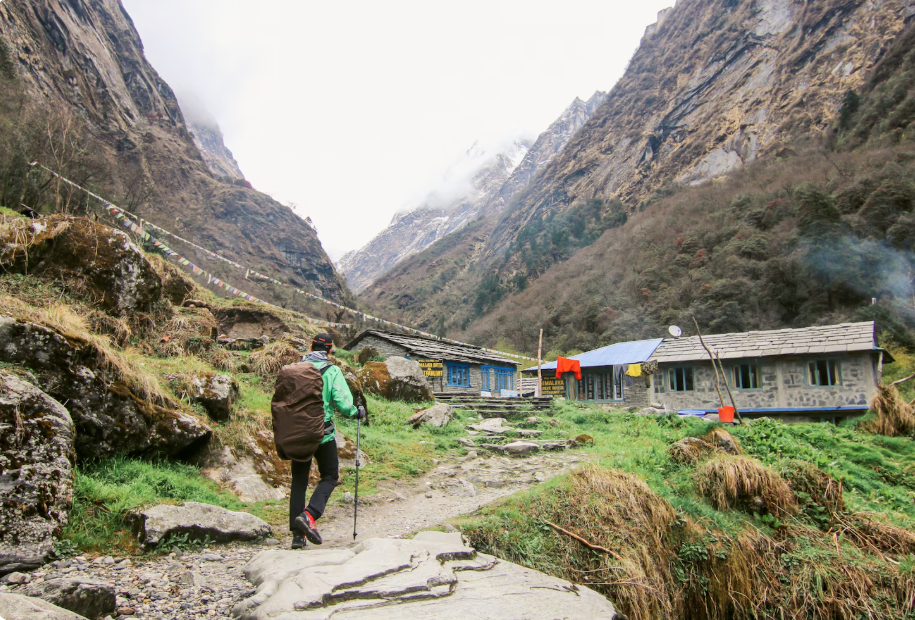
The Manaslu trekking route is one of Nepal’s most spectacular yet less commercialized long-distance trekking experiences. Circling Mount Manaslu (8,163 m), the eighth-highest peak in the world, the Manaslu Circuit Trek offers a rare combination of pristine landscapes, rich Himalayan culture, and challenging high-altitude trekking.
This article provides a detailed, SEO-focused overview of the Manaslu trekking route, the distance of the Manaslu Circuit Trek, daily trail progression, and why this trek is considered one of the best alternatives to Everest and Annapurna.
Overview of the Manaslu Circuit Trek
Located in Nepal, the Manaslu region lies in a restricted trekking area close to the Tibetan border. The trek follows the Budhi Gandaki River valley before crossing the dramatic Larkya La Pass and descending into the Annapurna region.
Unlike heavily trafficked routes, the Manaslu trek remains uncrowded due to permit regulations and limited infrastructure. This has preserved its raw Himalayan charm, making it ideal for trekkers seeking authenticity, isolation, and cultural depth.
Distance of the Manaslu Circuit Trek
The total distance of the Manaslu Circuit Trek typically ranges between 160 and 180 kilometers (100–112 miles), depending on the itinerary, side trips, and road conditions at the trailhead.
- Average distance: ~177 km
- Trekking days: 14–18 days
- Daily walking distance: 10–15 km on average
- Maximum elevation: 5,106 m at Larkya La Pass
Although the distance is comparable to other classic Himalayan treks, the Manaslu route feels more demanding due to its remoteness, frequent ascents and descents, and longer stretches between settlements.
Detailed Manaslu Trekking Route (Day-by-Day Overview)
1. Soti Khola to Machha Khola
The Manaslu trekking route officially begins at Soti Khola after a long drive from Kathmandu. This section follows terraced farmland and subtropical forest paths along the Budhi Gandaki River.
- Distance: ~14 km
- Landscape: River valleys, waterfalls, suspension bridges
2. Machha Khola to Jagat
As the trail gradually climbs, trekkers pass through Gurung villages and narrow gorges. Jagat serves as the checkpoint for Manaslu restricted area permits.
- Distance: ~22 km over two days
- Highlights: Traditional stone villages, deep river canyons
3. Jagat to Deng
The terrain becomes more rugged, and Tibetan cultural influence begins to appear. Mani walls, prayer flags, and monasteries line the trail.
- Distance: ~20 km
- Culture: Strong Buddhist heritage
4. Deng to Namrung
This segment includes consistent elevation gain through dense forests and alpine landscapes. Namrung is a key acclimatization stop with stunning views of Manaslu.
- Distance: ~19 km
- Scenery: Pine forests, mountain vistas
5. Namrung to Samagaun
The Manaslu trekking route opens into wide alpine valleys. Samagaun is one of the largest villages on the trek and a crucial acclimatization hub.
- Distance: ~17 km
- Side trips: Manaslu Base Camp, Pungyen Gompa
6. Samagaun to Samdo
The trail ascends gradually, with a noticeable change in vegetation. Samdo lies close to the Tibetan border and showcases high-altitude pastoral life.
- Distance: ~8 km
- Altitude: 3,875 m
7. Samdo to Larkya Phedi
A short but important day to prepare for crossing Larkya La Pass. The focus here is rest and acclimatization.
- Distance: ~6 km
8. Larkya La Pass to Bimthang
Crossing Larkya La is the most challenging and rewarding day of the Manaslu Circuit Trek.
- Distance: ~18 km
- Elevation: 5,106 m
- Highlights: Panoramic Himalayan views, glaciers, prayer flags
9. Bimthang to Dharapani
The descent leads into the Annapurna region, marked by greener forests and warmer temperatures.
- Distance: ~25 km over two days
- Trail connection: Joins the Annapurna Circuit route
Trekking Terrain and Difficulty
Despite its moderate daily distances, the Manaslu trekking route is considered moderate to challenging due to:
- Long ascents and descents
- High altitude above 4,000 m
- Remote location with limited facilities
- Weather variability near the pass
Proper acclimatization and a gradual itinerary are essential for completing the distance safely.
Best Time to Trek the Manaslu Circuit
The ideal seasons for covering the Manaslu trek distance are:
- Spring (March–May): Stable weather, blooming rhododendrons
- Autumn (September–November): Clear skies, best mountain views
Winter trekking is possible but risky due to heavy snowfall at Larkya La Pass, while the monsoon season brings landslides and poor visibility.
Cultural Experience Along the Manaslu Route
One of the defining features of the Manaslu Circuit Trek is its cultural richness. Villages along the route are inhabited by Gurung, Nubri, and Tibetan-origin communities who maintain centuries-old traditions.
- Buddhist monasteries and chortens
- Tibetan-style stone houses
- Seasonal yak herding
This cultural immersion adds depth to every kilometer walked.
Why the Manaslu Circuit Trek Distance Is Worth It
Although covering nearly 180 km may seem daunting, the Manaslu trekking route rewards trekkers with:
- Unspoiled Himalayan landscapes
- Fewer crowds than Everest or Annapurna
- Diverse ecosystems from subtropical to alpine
- A true sense of expedition-style trekking
Each day feels distinct, making the overall distance feel purposeful rather than repetitive.
Final Thoughts
The distance of the Manaslu Circuit Trek is not just a number—it represents a journey through changing climates, cultures, and elevations. From lush river valleys to high Himalayan passes, the Manaslu trekking route delivers one of Nepal’s most complete and rewarding trekking experiences.
