
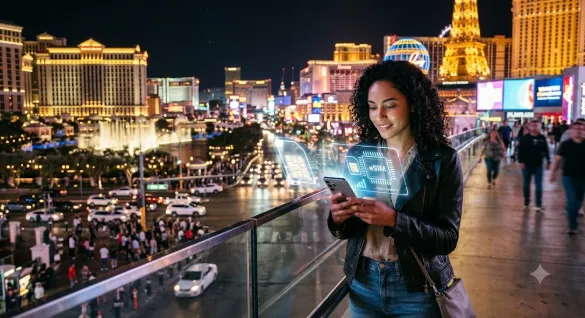
Ah, Las Vegas! A city of dazzling lights, endless entertainment, and unforgettable experiences. Whether you’re hitting the casinos, exploring the gourmet dining scene, catching a world-class show, or venturing out to the majestic Red Rock Canyon, staying connected is no longer a luxury—it’s an absolute necessity. From navigating Ubers and checking reservation times to sharing those envy-inducing photos and video calls with loved ones, reliable mobile data can make or break your trip. But how do you ensure seamless connectivity without racking up exorbitant roaming charges or getting lost in a labyrinth of confusing local plans? This guide cuts through the noise, offering practical advice on everything from traditional physical SIM cards to the increasingly popular eSIM technology, ensuring your phone is as ready for Vegas as you are.
Why You Need Reliable Data in Las Vegas
Beyond the obvious need for social media updates, a robust data connection is crucial for the practicalities of a Las Vegas vacation. Imagine trying to hail a rideshare without GPS, finding that hidden gem restaurant without a map app, or even scanning a digital ticket for a show. Many venues now rely heavily on QR codes and digital passes. Furthermore, with the sheer scale of the Strip and surrounding areas, it’s easy to get disoriented, making navigation apps indispensable. Reliable data ensures you’re always in control, whether you’re finding the quickest route to a specific casino or looking up real-time show schedules.
The Traditional Path: Physical SIM Cards in Vegas
For many years, the go-to solution for international travelers was a local physical SIM card. In Las Vegas, this typically means heading to a store operated by one of the major U.S. carriers: T-Mobile, AT&T, or Verizon. These stores are abundant, especially in commercial areas and malls, but generally not directly on the Strip itself, requiring a short detour. The process usually involves selecting a pre-paid plan, providing some basic identification, and having the store representative install the SIM card for you. Plans vary but often include unlimited talk and text within the U.S., plus a set amount of high-speed data for a specific duration (e.g., 30 days).
While straightforward, this method does have its considerations. You’ll need an unlocked phone, and you’ll have to physically swap out your home country’s SIM card, which means carefully storing it to avoid loss. This can also mean temporarily losing access to your home number for calls or texts. While some convenience stores or airport kiosks might sell SIM cards, they often have limited options and higher markups compared to official carrier stores. Always verify your phone’s compatibility with U.S. network bands before purchasing to ensure optimal performance.
Embracing the Future: The Power of eSIMs for Vegas Travelers
Enter the eSIM, or embedded SIM, a game-changer for modern travelers. Instead of a physical chip, an eSIM is a digital profile that’s downloaded directly to your phone. Most newer smartphones (iPhone XS and later, many Samsung Galaxy models, Google Pixel 3 and later, etc.) are eSIM compatible. The advantages are compelling: no physical swapping, no tiny cards to lose, and the ability to switch between multiple plans digitally. This means you can keep your home SIM active for calls and texts while using an eSIM for data, effectively turning your phone into a dual-SIM device.
Activating an eSIM is usually a quick process, often involving scanning a QR code or entering a code provided by the eSIM provider. You can purchase and set up your plan before you even leave home, ensuring you land in Vegas with instant connectivity. For those seeking the ultimate convenience and looking to bypass traditional roaming charges, an eSIM for your Las Vegas trip is often the superior choice, offering flexibility and cost-effectiveness. It’s a truly hassle-free way to stay online.
Data Plans and Coverage: What to Expect
When selecting a data plan, whether for a physical SIM or an eSIM, consider your typical usage. For a few days of light browsing, mapping, and social media, 5GB to 10GB of data for a week might suffice. If you plan on streaming, video calls, or using your phone as a hotspot, look for plans with higher data allowances or even ‘unlimited’ options, though these often come with a high-speed data cap before throttling. Most providers in Las Vegas offer excellent 4G LTE and increasingly 5G coverage throughout the Strip, downtown, and surrounding urban areas.
However, if your Vegas adventure includes day trips to more remote natural attractions like the Valley of Fire State Park or parts of the Hoover Dam area, coverage can become spotty depending on the carrier. It’s always wise to check coverage maps for your specific destinations if you plan to stray far from the city center. For the vast majority of visitors staying within metropolitan Las Vegas, you can expect reliable and fast internet speeds.
Pro Tips for Staying Connected and Saving Money
To maximize your connectivity and minimize costs, consider these seasoned traveler tips. First, download offline maps of Las Vegas and any areas you plan to visit before you leave your hotel Wi-Fi. Google Maps and Apple Maps both offer this feature, ensuring you can navigate even without a live data connection. Second, take advantage of free Wi-Fi whenever possible. Most hotels, casinos, restaurants, and coffee shops on the Strip and downtown offer complimentary Wi-Fi for guests.
Third, regularly monitor your data usage through your phone’s settings or the provider’s app to avoid unexpected overages, especially if you’re on a capped plan. Finally, for those who travel frequently to various international destinations, exploring options from a global travel eSIM service can provide a consistent and convenient solution for connectivity wherever you go. With a little planning, you can navigate Las Vegas like a local, ensuring you’re always connected without breaking the bank.